Greater insight and control through streamlined operations with Salesforce
We build the operational processes and systems that allow your housing counselors, KCC staff, and neighborhood managers to spend less time on administrative tasks and more time on what really matters: the tenant. This isn’t a standalone IT project, but rather a single external operational team that acts as an extension of your organization and is responsible for your Salesforce and Wunderbricks environments, process optimization, and data quality.

Too many valuable hours are wasted on silos
Housing authorities are under enormous pressure. The challenges surrounding performance agreements, sustainability, affordability, and quality of life require operational efficiency and agility. Yet in practice, too many valuable hours are still wasted on siloed systems, manual data transfers, and reactive communication.
The Reactive and Inefficient Organization
Due to the lack of efficient processes and up-to-date management information, the context regarding the tenant is lost when information is transferred between departments and suppliers. As a result, housing counselors, KCC staff, and neighborhood managers only take action once a nuisance has already occurred or rent is already in arrears.
The result:
The organization is constantly "putting out fires" instead of taking a proactive approach. Valuable time is wasted trying to determine the correct status.
Systems do not provide guidance
Employees have to figure things out on their own and are not actively guided by the system. This discourages employees and leads to an unnecessary loss of productivity. Why isn't the system intuitive?
The result:
An increase in the administrative burden on employees. They spend more time entering and searching for data in systems than they do providing actual social value to tenants and the neighborhood.
The Tenant Experience Under Pressure
The transition from the initial intake to the handover of keys and the first period of living in the home involves a series of separate steps. Because there is no combined “tenant and property profile,” the tenant must repeat their story at every point of contact (repairs, sustainability improvements, quality of life).
The result:
Long turnaround times, frequent follow-up calls, and room for improvement in tenant satisfaction. Tenants do not view the housing authority as a proactive, engaged partner.
One team for the blueprint, the design, and the years to come
We combine your goals with our best practices and implement the corresponding Salesforce technology. In doing so, we provide insight and control over the entire customer or tenant lifecycle, whether it involves commercial goals, tenant satisfaction, or internal productivity.

Step 1 — the design
Blueprint & Operations Design
We’ll start with our predefined blueprint based on Wunderbricks and Salesforce. We’ll walk through the processes and discuss the handoffs between tenant relations, housing & real estate, and finance. We’ll define the areas of flexibility that make your housing association unique and prepare for implementation.

Step 2 — The Layout
End-to-End Salesforce Implementation
Now it’s time to get technical. We’ll configure our corporate template and set up integrations with the other systems. We’ll prepare the data, set up the dashboards, and get the system ready for use. We’ll wrap things up with thorough training and provide support during the rollout.

Step 3 — Continuity
Insights &
Optimization
We don’t just walk away after implementation—we remain involved. We help generate the right insights, maintain the system, ensure data quality, and add functionality as needed. If legislation changes, we make sure the system adapts seamlessly.
Core processes defined correctly once and for all
Even though every housing association has its own unique characteristics, the core processes are the same. That’s why we’ve thoroughly documented those processes once and for all in our sector blueprint for housing associations, based on the CORA primary processes. We’ve built these processes on Salesforce and Wunderbricks—not as a straitjacket, but as a solid starting point.

The Step-by-Step Blueprint
From registration to a happy home: Below, you’ll find an at-a-glance overview of the blueprint’s building blocks, and we’ll explain each step in more detail.
People looking for housing register and are immediately matched with the right tenant profile. All preferences and details are centralized in one place, eliminating the need for duplicate entries or outdated information.
Current inventory and waiting lists are combined with urgency and Cora rules, so that housing counselors can propose a suitable match more quickly and escalations are identified in a timely manner.
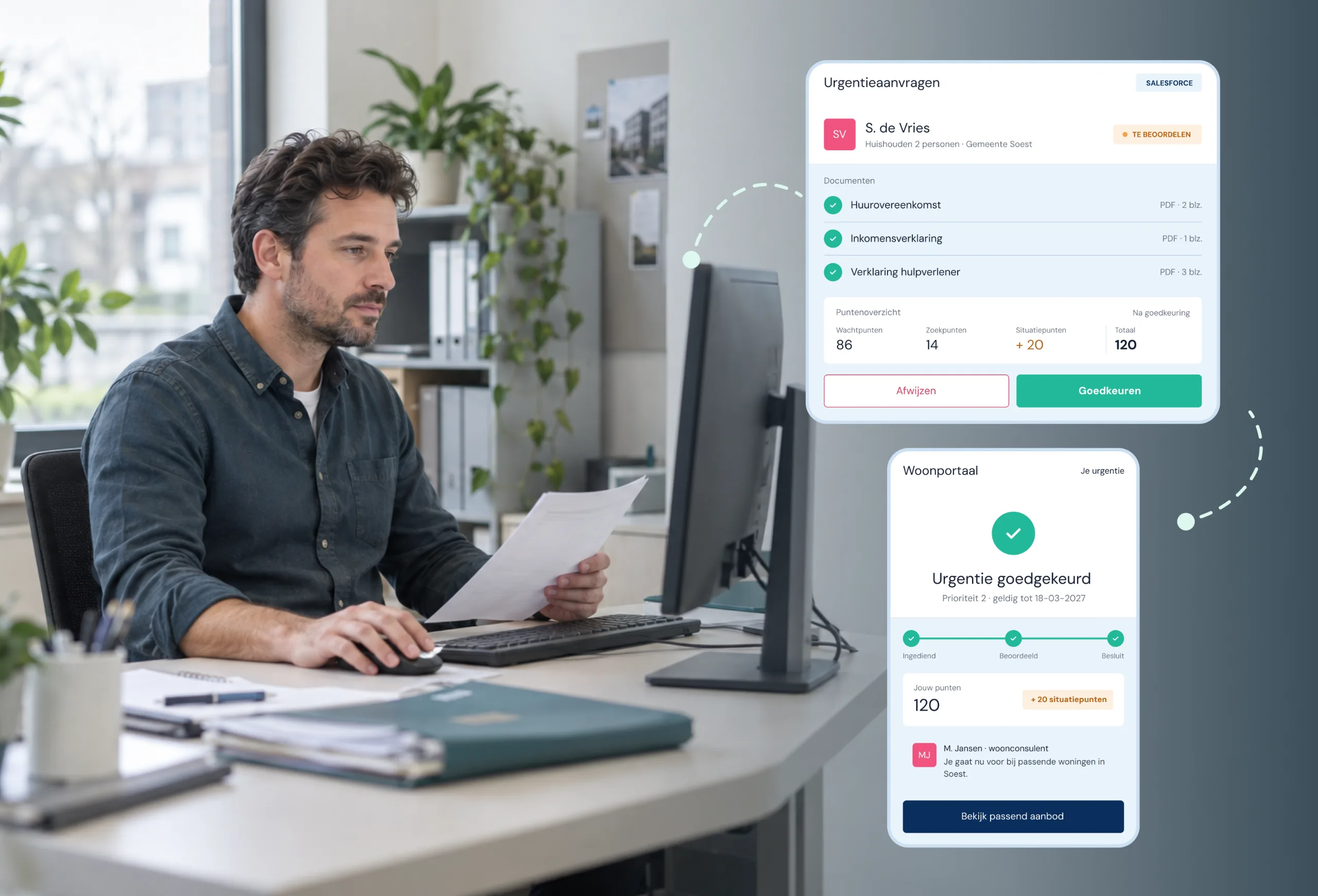
From viewings to assignments: the rental process is organized with clear tasks and statuses, ensuring that nothing falls through the cracks and that the tenant always knows where they stand.
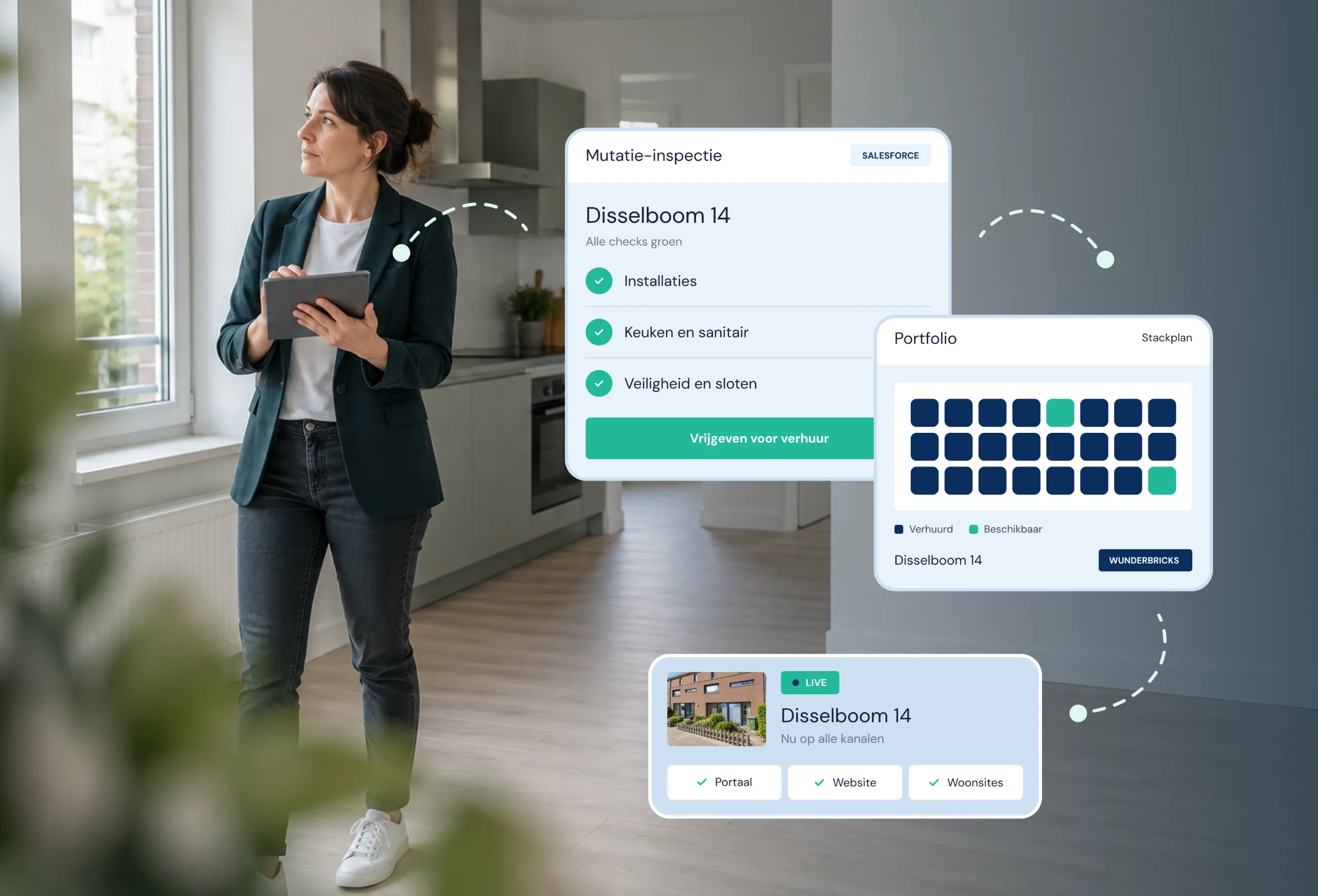
The moment when the tenant and the housing authority are officially linked. From this point on, all information is automatically forwarded to property management, maintenance, and finance.
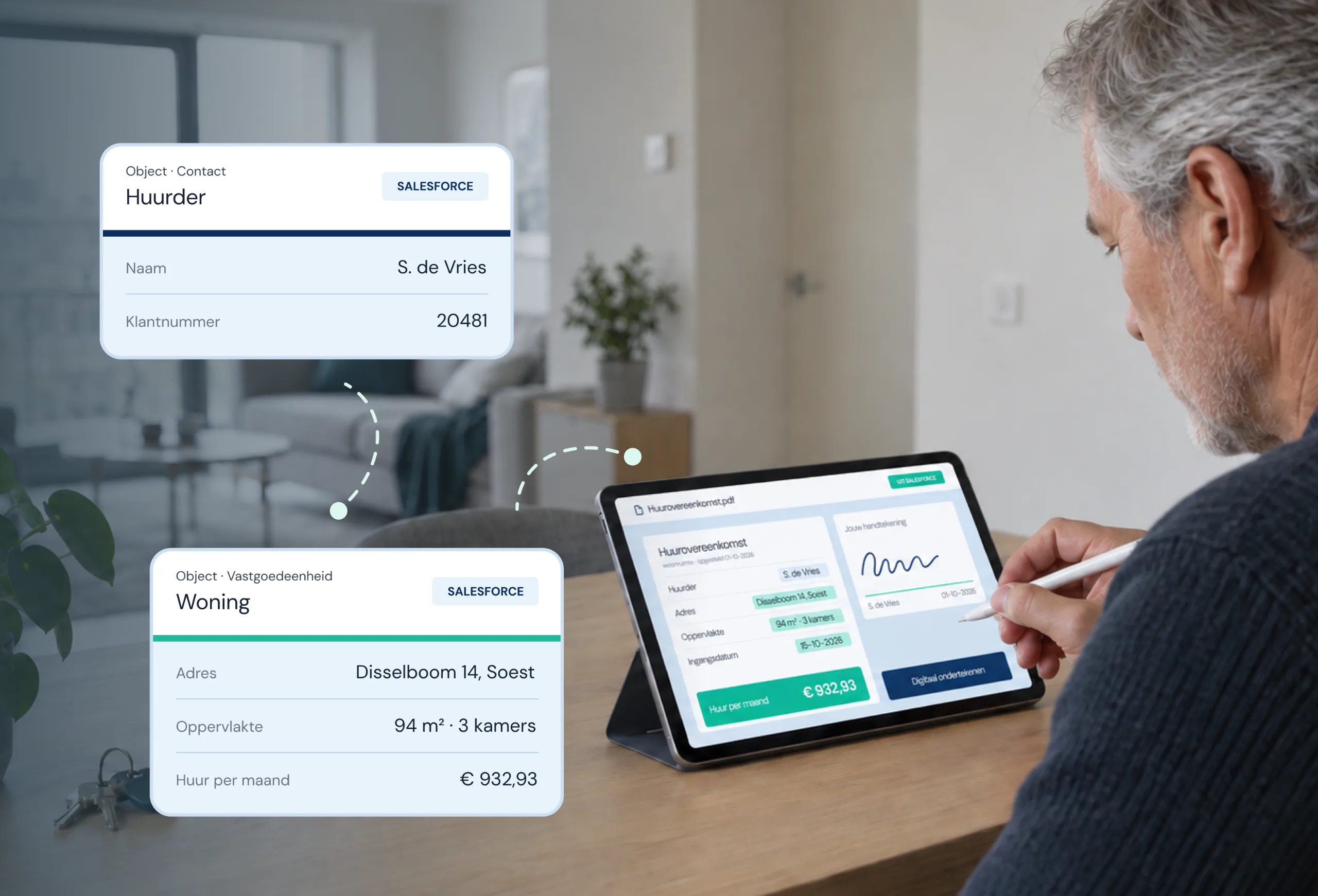
Key handover, contract details, and unit information are automatically forwarded to management, so that neighborhood consultants can get to work right away with the correct context.
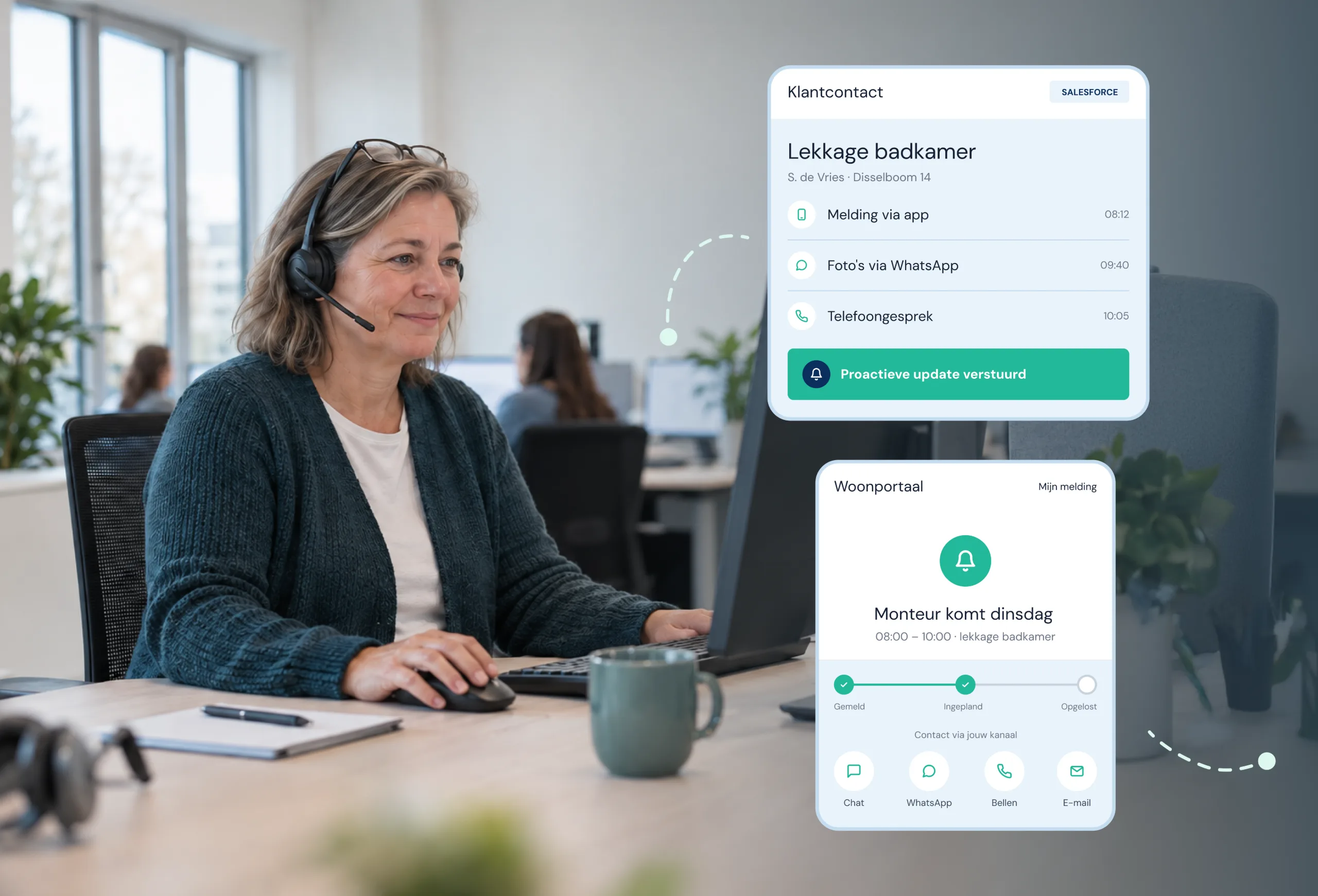
Reports, repair requests, and maintenance scheduling are all consolidated into a single system, with clear turnaround times and full visibility into the status for both tenants and KCC employees.
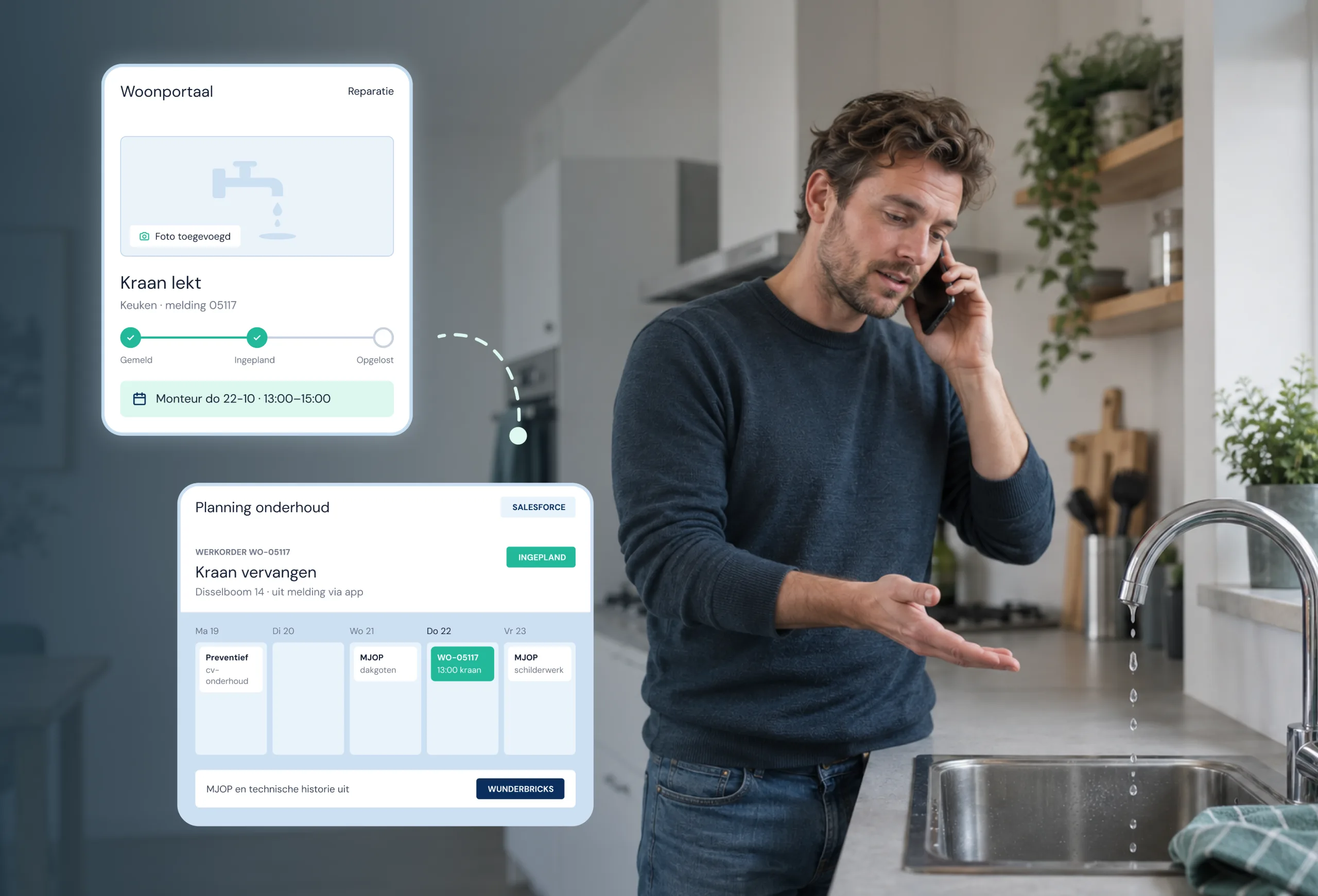
Feedback regarding quality of life, nuisances, and satisfaction is proactively monitored so that housing counselors and neighborhood managers can take timely corrective action rather than having to put out fires after the fact.
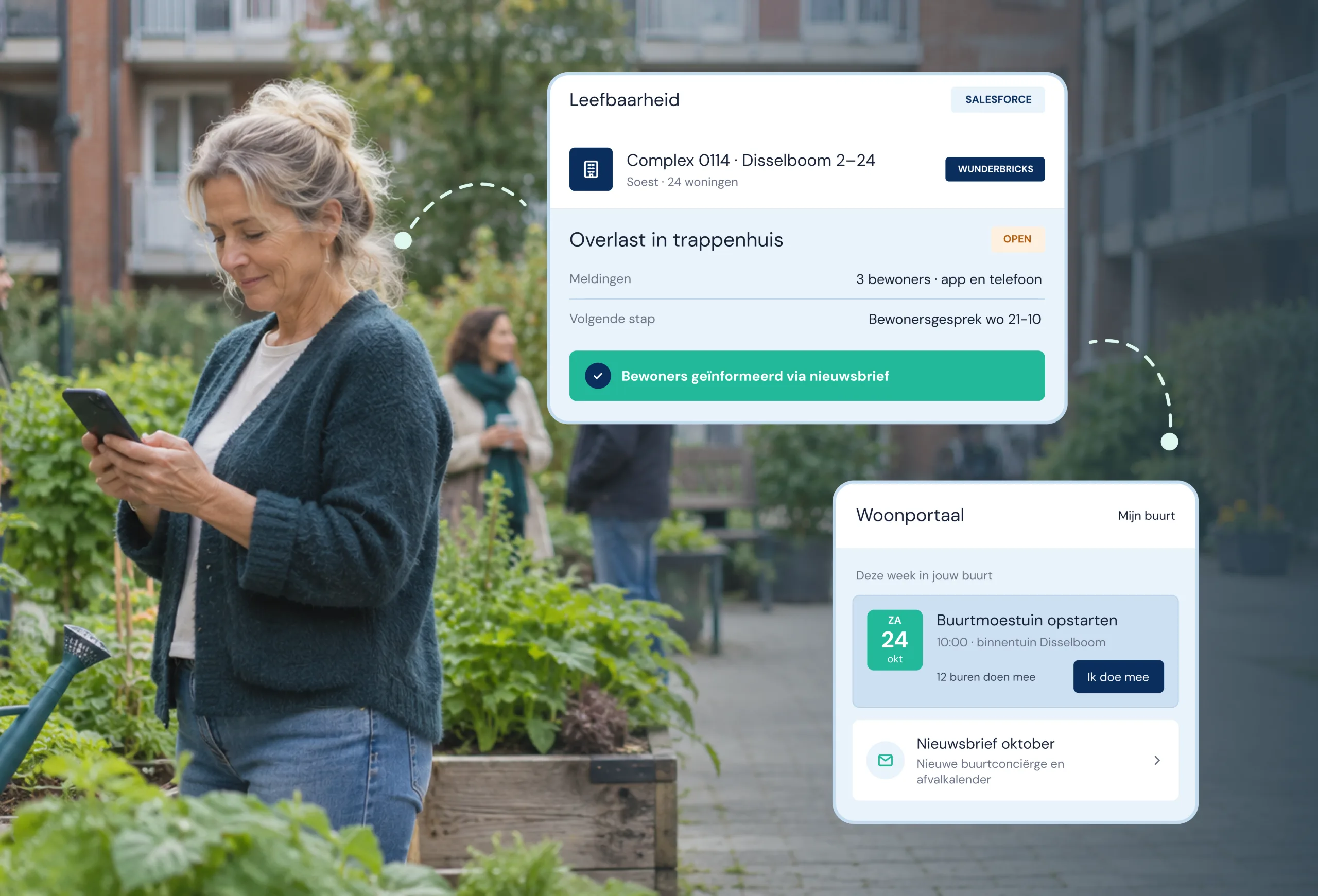
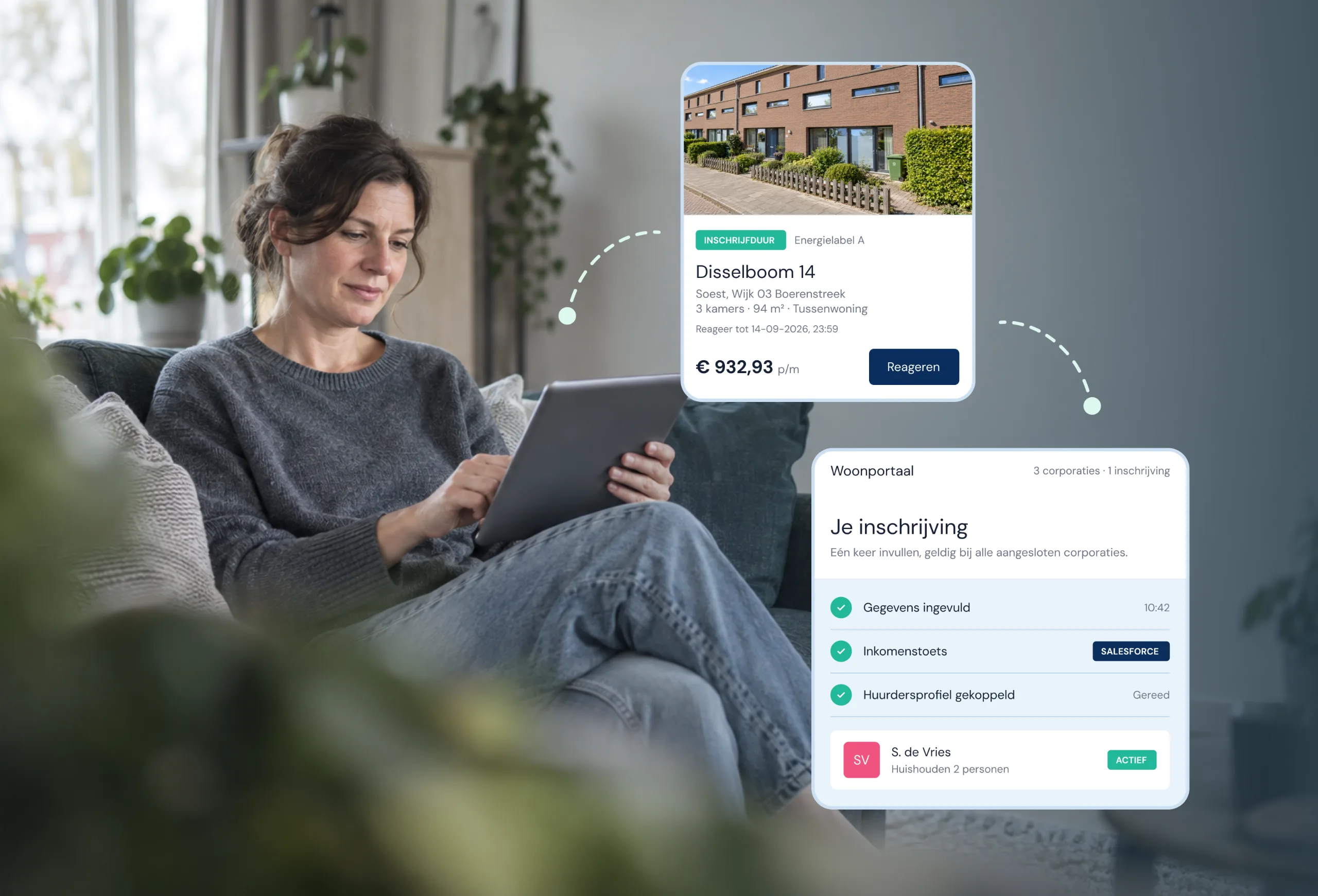
The tenant can see exactly where the notice is posted—and can take care of it right away
No need to wait in line at the KCC for a simple question. The tenant portal displays the same up-to-date information as the KCC staff member and the contractor, and the AI assistant not only answers questions but also reschedules appointments and immediately updates the status of the report.
Hans and Niels on Our Approach to Housing Cooperatives
Managing Partner Hans and Sector Lead Niels walk through the challenges that housing cooperatives face in practice—fragmented tenant information, reactive management, manual handoffs between departments—and explain the decisions behind them in our blueprint for Salesforce and Wunderbricks.

What housing cooperatives usually ask us first
Can't find your question here? Feel free to ask it during an introductory meeting.
Do you offer both primary and secondary support?
We offer both models. For second-line support, BRITE serves as the point of contact for application management, but we also provide first-line support for employees—both by phone and on-site.
Isn't Salesforce a CRM?
Salesforce is a platform that combines property management (Wunderbricks) and customer engagement (Salesforce) into a single data model. So there are no behind-the-scenes integrations between CRM and ERP—just the true benefits of a single platform.
Is Salesforce expensive?
We compared the costs of Salesforce with those of Microsoft-based alternatives on the market. Our analysis shows that the costs are comparable.
What is the main difference compared to Microsoft systems?
Wunderbricks’ flexible data model makes the system suitable for every conceivable rental scenario. You work on a single platform with a single data model, rather than a Microsoft interface that actually consists of two underlying systems (CRM and ERP). And since you don’t purchase licenses and services from a single provider, you can always switch service providers—even if you’re satisfied with the application.