
Gain Better Control of Your Commercial Operations with Salesforce
We build the operational processes and systems that allow the sales, marketing, and service departments to spend less time on administrative tasks and gain better control over leads, the quoting process, and customer satisfaction.
Not just another IT project, but a single external operational team that acts as an extension of your organization and is responsible for your Salesforce environment, process optimization, and data quality.




The Cost of a Lack of Insight and Outdated Systems
Manufacturing companies are under increasing pressure. You’re looking to improve your bottom line and meet rising customer expectations. However, an inflexible ERP system, staff shortages, and inadequate customer and management information are preventing you from achieving your goals. You want to automate, but the technology is getting in the way.
Fragmented customer information
Without a single, centralized view of the customer, context regarding the customer is lost when information is passed between marketing, sales, back-office, and customer service. As a result, teams lack visibility into ongoing conversations, deviating price agreements, or recent complaints.
The result:
Valuable time is wasted trying to determine the correct status through internal emails, phone calls, and ERP searches. This creates internal confusion and a lack of management information. Your customers feel that your employees are not fully informed.
Slow and error-prone sales processes
Due to the lack of standards and automation for complex product configurations, account managers are often overwhelmed by calculations and coordination. Customer-specific agreements are not processed automatically, and a great deal of manual review is still required to ensure that quotes are sent out error-free.
The result:
The organization spends too much time on administrative coordination instead of actively engaging with customers. Quotes are issued too late and contain errors, causing orders to go to competitors and putting pressure on margins due to calculation errors.
Poor customer communication hinders growth
Due to a lack of data, automation, and a focus on timely communication regarding that new product line or asset maintenance, you’ll find yourself playing catch-up. Your customers will perceive you as reactive.
The result:
Because you’re reliant on your salespeople’s limited time, you generate fewer leads and hinder your own growth. Since you only respond when a problem arises, your customers experience unnecessary downtime. You think about providing proactive service, but you’re not delivering on it yet.
One team for the blueprint, construction, and the years to come
We combine your objectives with our best practices and implement the corresponding Salesforce technology. In doing so, we provide insight and control over the entire customer or tenant lifecycle, whether it involves commercial objectives, customer satisfaction, or internal productivity.

Step 1 — Getting Started
Blueprint & Operations Design
We’ll start with our predefined blueprint based on Rootstock, 24Flow, and Salesforce. We’ll walk through the processes and discuss the handoffs between sales, production, planning, and service. We’ll define the variables that make your business unique and prepare for implementation.

Step 2 — Construction
End-to-End Salesforce Implementation
Now it’s time to get technical. We’ll configure our template for manufacturing companies and set up integrations with other systems. We’ll prepare the data, set up the dashboards, and get the system ready for use. We’ll wrap things up with thorough training and provide support during the rollout.

Step 3 — Continuity
Insights &
Optimization
We don’t just walk away after implementation—we remain involved. We help generate the right insights, maintain the system, ensure data quality, and add functionality as needed. If legislation changes, we make sure the system adapts seamlessly.
From Market to Expansion
The flow narrows at Commit—the moment the deal is finalized—and then widens again toward delivery, service, and expansion. This is the blueprint: the core processes of the manufacturing industry, built on Salesforce, from initial market awareness to long-term customer relationships.
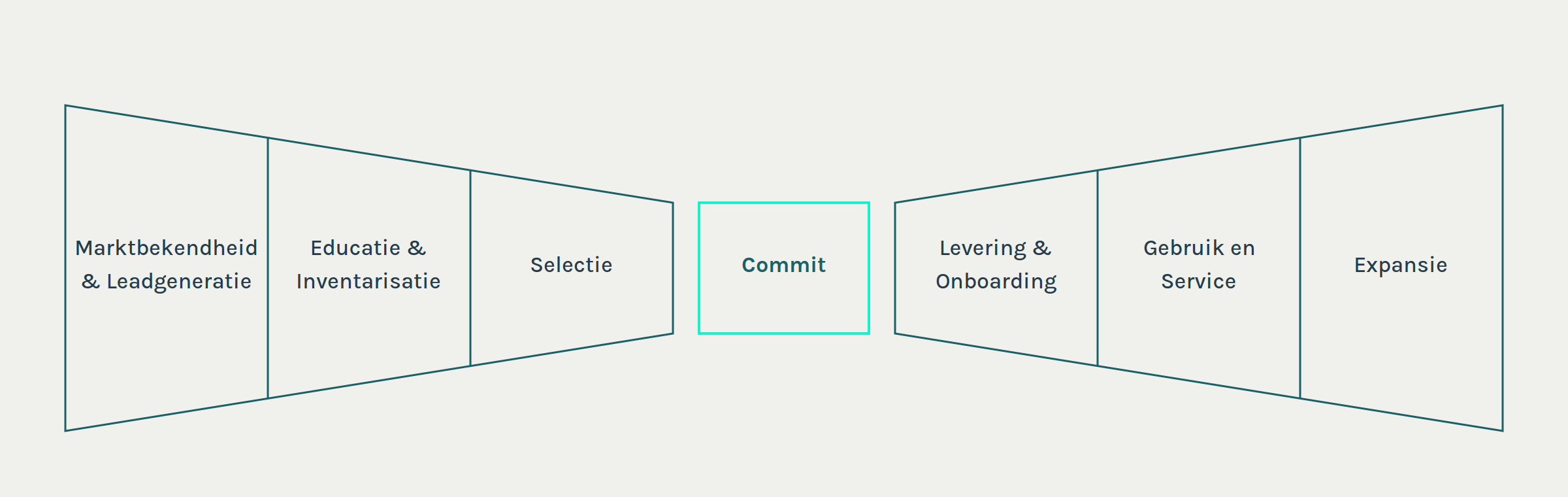
You’ll promote your technology solutions to the target audience. This is done through trade shows, online content, demo setups, and networking, with the goal of generating qualified leads from OEMs, system integrators, or end users.
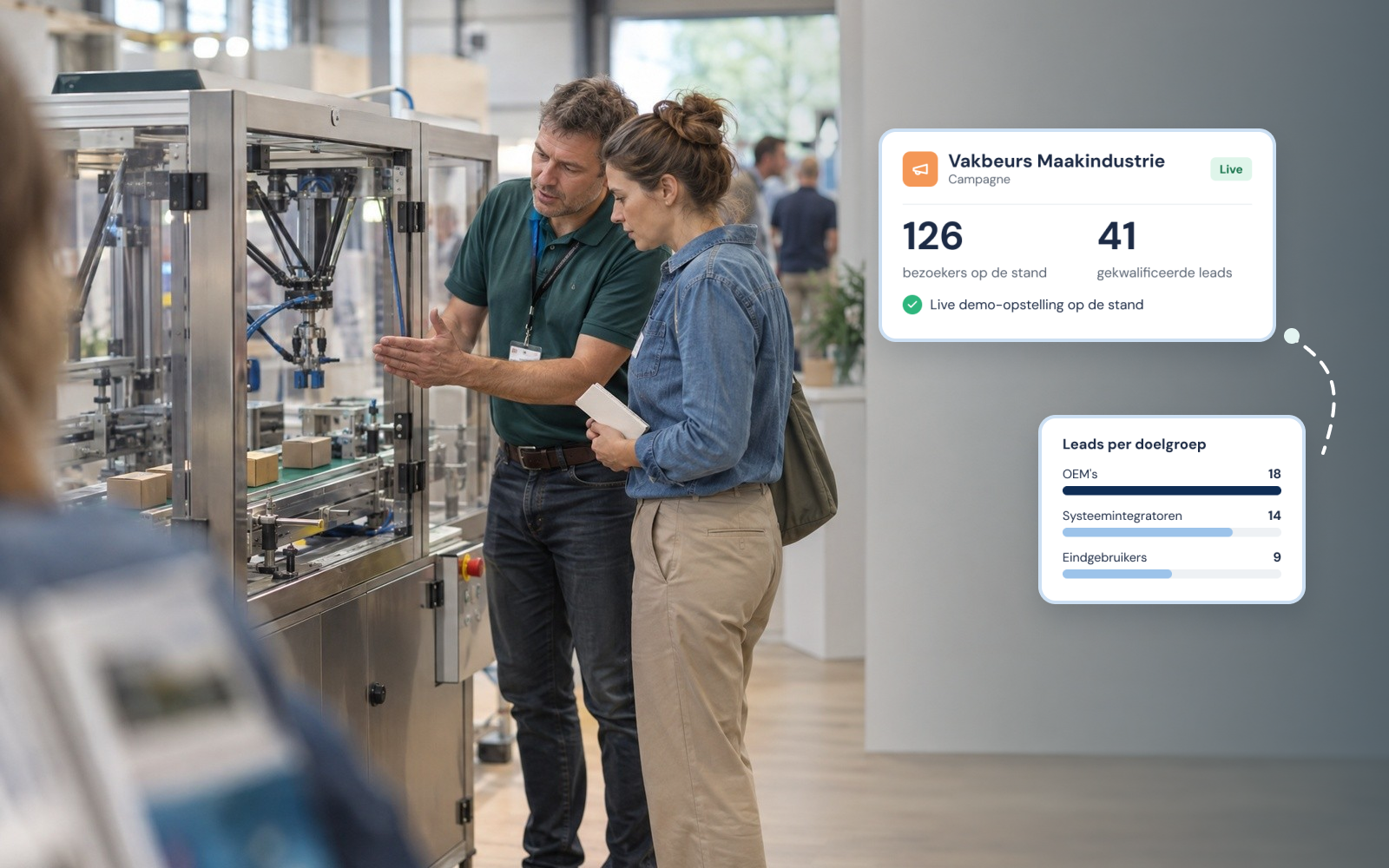
In this phase, you carefully identify the specific customer requirements. You assess technical specifications such as capacity, footprint, integration requirements, and standards, and, if necessary, conduct feasibility studies or pilot tests to fully understand the problem.

You translate the customer's requirements into a concrete technical and commercial proposal. You select or configure the products, provide the customer with a quote, and submit the proposal. The customer compares your offer with alternatives.

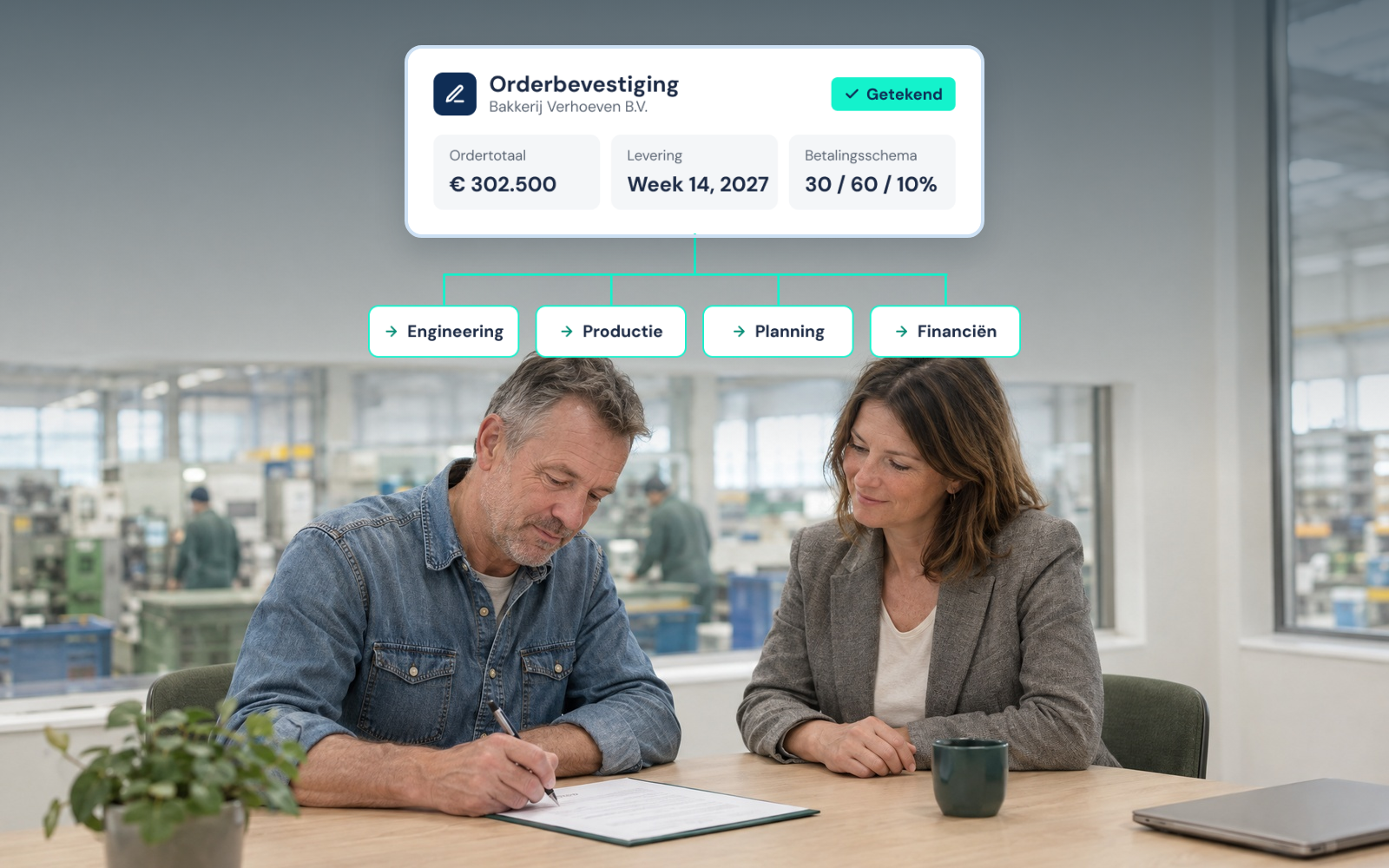
The moment the final deal is sealed. The order confirmation is signed, the delivery terms and payment schedules are established, and the go-ahead is given for engineering and production.
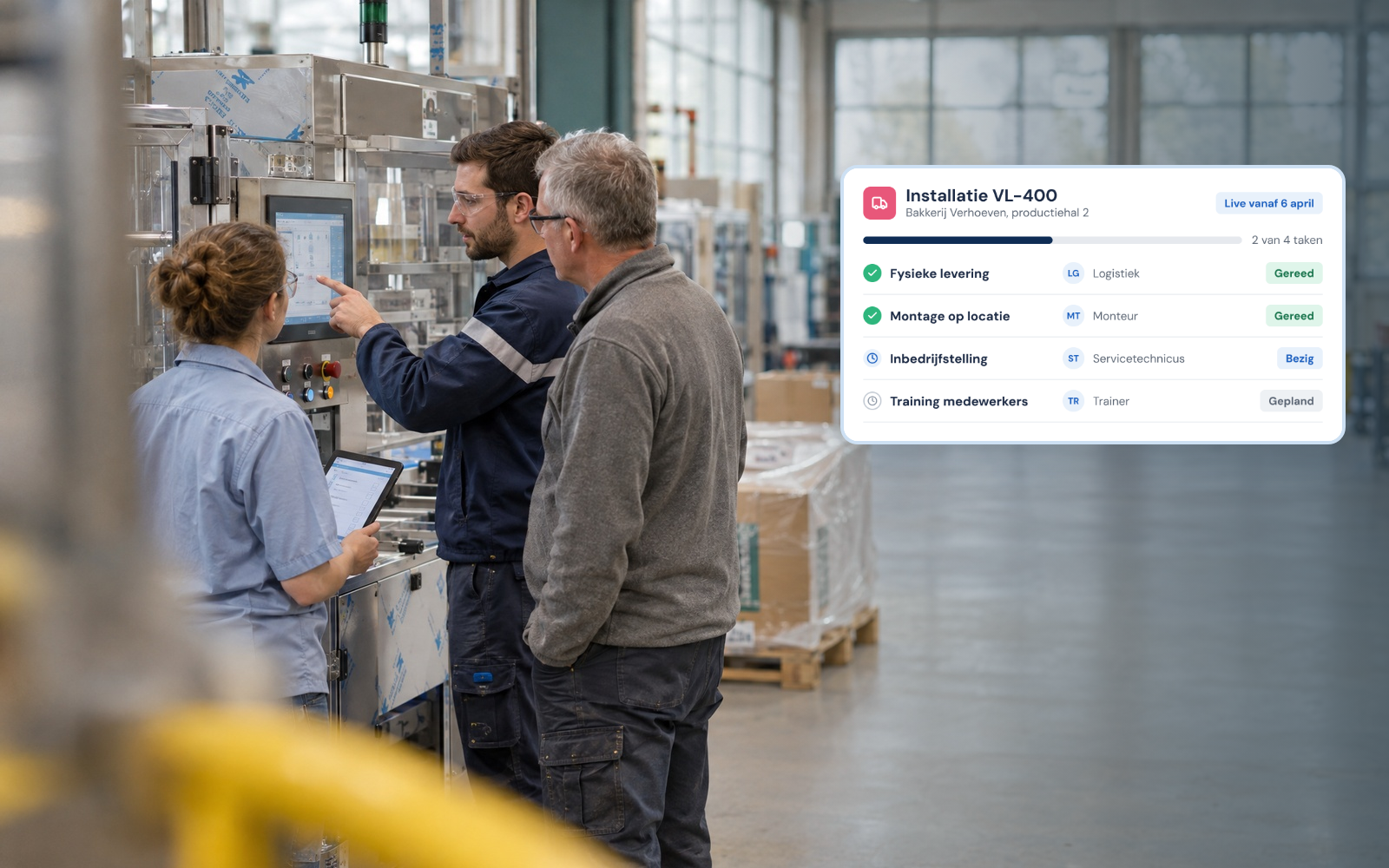
The products are delivered, or the machine is assembled and prepared for use. This phase includes physical delivery, on-site commissioning, and training of the customer's employees.
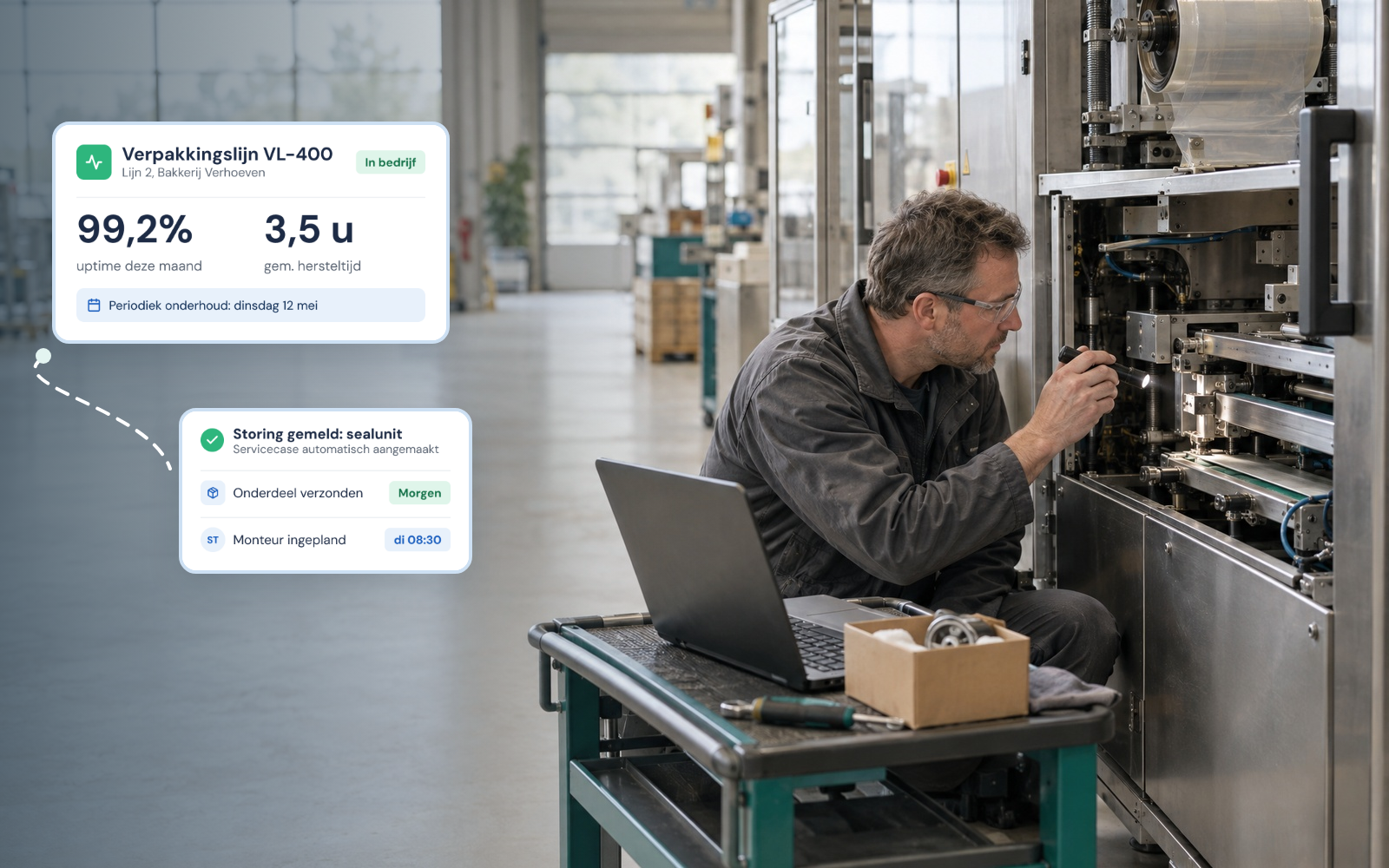
The products or machines are used in the customer’s daily production. You ensure maximum uptime and operational effectiveness by quickly delivering spare parts, providing troubleshooting assistance, and performing periodic maintenance.
This is the phase in which long-term value is realized. Based on usage data and customer interactions, you respond to expansion needs: you enter into preventive service contracts, perform retrofits and software upgrades, or supply additional products, machines, and production lines as the customer grows.

The sales rep goes into the meeting fully prepared—without having to do any research on their own
Sales, production, planning, and service are all integrated into a single solution. The AI assistant prepares all relevant information for the next on-site appointment and immediately incorporates the details agreed upon during the meeting into the quote.
Listen to how this approach works in practice
In this episode of “At the Table with BRITE,” Managing Partner Hans and Industry Lead Merwin discuss the challenges they see in the manufacturing industry.
What manufacturing companies usually ask us first
Can't find your question here? Feel free to ask it during an introductory meeting.
Why should I add Salesforce if I already have a business system?
A business system is, above all, a difficult-to-use data-tracking system. It lacks the flexibility to automate customer processes in sales, marketing, and service. Salesforce is a user-friendly addition to your existing system, where all that data comes together and you can actually take action based on it.
I don't recognize my company in "standard Salesforce"
That's right, and we hear that a lot. Salesforce's standard building blocks are customizable, but many manufacturing companies don't immediately see themselves reflected in them. That's why we've built our own foundation for companies that manufacture to customer order, so you can start with a familiar, industry-specific setup instead of from scratch.
Is Salesforce expensive?
That’s a common misconception, but in practice, the costs for licenses and implementation turn out to be surprisingly comparable to those of other systems. We always weigh the investment against the benefits it provides, so it doesn’t turn into a costly hobby project.
Does this also work if we manufacture many different products in small quantities?
Yes, 24Flow was specifically designed for this type of production. It is designed to minimize wait times and prevent too many work-in-progress items from being processed at the same time, thereby shortening lead times.